
A truck tyre failure needs more than a tyre that simply fits. If you need an HGV tyre fitter near me, mobile fitting brings tyre replacement and puncture repair to a suitable roadside or other accessible location. Mobile Tyre Fitting Essex supports HGVs, lorries and trucks across Essex and nearby areas, with tyre selection based on the vehicle and its specification.
A blowout or damaged tyre can disrupt a delivery and leave a vehicle stranded. You need clear steps, accurate information and a reliable way to get the vehicle moving again. This guide explains which commercial vehicles can be serviced, how roadside HGV tyre replacement works, and what to have ready when arranging help.
You’ll learn which details to read from the tyre sidewall, what location information helps technicians find you and what can affect the quote. Whether you manage a fleet or drive a single truck, having these details ready can make arranging help more straightforward when a tyre problem stops your journey.
Key Takeaways
- See how mobile tyre replacement can support commercial vehicles at a roadside location or fleet site.
- Learn what to expect during an emergency HGV tyre replacement, from sharing the breakdown location to fitting the replacement.
- Understand which vehicle and tyre details help identify a suitable replacement.
- Find out when a damaged tyre may be repaired and when replacement is the practical next step.
- Prepare clear location details so mobile tyre technicians can find the vehicle more easily.
Do You Provide Tyre Replacement Services for Fleets of Commercial Vehicles?
In Essex, mobile HGV tyre callouts are available around the clock for roadside replacement. For fleets, the right support depends on the vehicle, tyre specification and exact location.
Fleet roadside tyre replacement
A 24/7 roadside call-out can help a fleet vehicle with a damaged tyre at the roadside or another accessible site. Give the tyre fitting service the vehicle type, its location and the tyre details you can read. For example, say whether it is a lorry or van, and whether it is stopped at a depot entrance or on a road.
For a fleet manager, one clear report helps identify the job and direct the mobile response. Share the vehicle’s position, a nearby landmark and a contact number for the person attending. If several vehicles need attention, say which one is immobilised and where each is parked. This gives the call-out a clear priority and destination.
Commercial tyre repairs and replacements
Puncture repair and tyre replacement address different problems. Some punctures may be suitable for repair, while extensive damage may mean the tyre needs replacing. The technician assesses the tyre and damage to determine the appropriate work. Describe what happened, such as a puncture noticed during a delivery or a blowout that stopped the truck.
When arranging a call-out, identify the affected axle or wheel if you know it. Report visible damage and whether the vehicle can move to a suitable stopping place. These details help describe the job. For a fleet, note which vehicle is affected and share any relevant tyre information from its maintenance records.
Tyre selection also depends on matching the replacement to the commercial vehicle and its existing specification. Truck tyres are not interchangeable simply because they look similar. Provide the vehicle make and model, and the sidewall details where possible. An example load number shown on a tyre is 94, but the correct specification must match the tyre being replaced.
New and part-worn tyre options
A new tyre has not previously been used; a part-worn tyre has been fitted before. These are different purchasing options, so fleet operators should consider the tyre’s condition, specification and role on the vehicle. For example, the requirements for a delivery van may differ from those for a loaded lorry on longer routes.
Before choosing a tyre, compare its details with the vehicle’s specification and consider its condition. Tread depth, visible damage and a correct specification are practical points to assess. For a fleet, keeping replacement records consistent can also make maintenance easier to manage. Base the choice on the actual vehicle and tyre, not appearance alone.
Emergency roadside HGV tyre replacement
A tyre failure can stop a truck mid-route and disrupt its next delivery. A 24/7 emergency roadside call-out brings tyre replacement to the vehicle’s location, rather than requiring it to travel to a fitting site. In Essex, on-site replacement support is available for heavy goods vehicles at any time of day or night.
Share clear details at the start of the call. Give the road name, direction of travel, nearest junction or landmark, and a useful vehicle description. For example, identify a white articulated lorry stopped near a named roundabout rather than giving only a postcode. Mention whether it is in a lay-by, depot entrance or another accessible position.
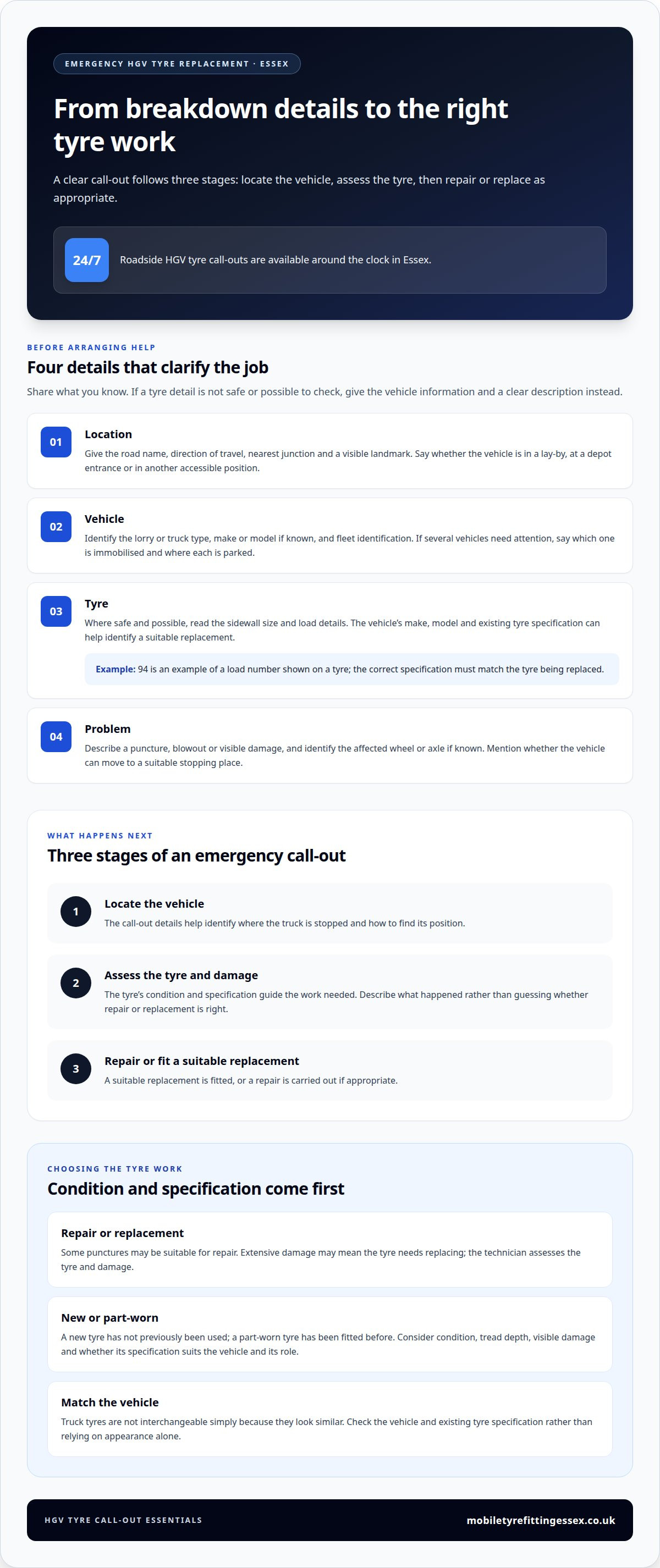
For a straightforward emergency call-out, prepare these details:
- Location: road name, direction, nearby junction and visible landmark.
- Vehicle: lorry or truck type, make or model if known, and fleet identification.
- Tyre: sidewall size and load details, if safe and possible to read.
- Problem: puncture, blowout or visible damage, plus the affected wheel if known.
These details help identify the vehicle and the tyre needed. A blowout may leave visible damage, while a puncture may need closer assessment. Describe what happened rather than guessing whether repair or replacement is appropriate. The tyre’s condition and specification guide the next step.
An emergency HGV tyre job centres on location, assessment and fitting. First, the call-out details identify where the truck is stopped. Then the tyre and damage are assessed to establish the work needed. A suitable replacement is fitted, or a repair is carried out if appropriate. The service focuses on the tyre, not unrelated vehicle repairs.
A 24-hour emergency service matters when a breakdown happens outside a planned depot visit. For example, a lorry with a damaged tyre on an overnight delivery route needs roadside assistance at its current position. The exact location matters: a clear access point helps mobile technicians reach the vehicle and carry out the tyre work on site.
To reduce avoidable delays, keep the vehicle’s tyre records accessible and ask the driver to share sidewall information where practical. If they cannot read it, the vehicle make, model and a clear description of the affected wheel still help explain the job. For emergency 24-hour tyre fitting, provide the location and vehicle details together.
Truck, trailer, van and digger tyre services
Tyre choice depends on the vehicle, wheel position and the work it performs. For HGVs, tyre suitability depends on matching the tyre to the vehicle’s requirements. Speed Rating is optional. Appearance alone cannot establish whether a tyre is a suitable match.
Tyre availability for truck types
Truck, trailer and van tyres serve different loads and working conditions, so identify the vehicle before arranging fitting. A tipper working on construction sites, for example, may need a different specification from a delivery truck using public roads. Digger tyres also need to suit the machine and its operating surface. Give the fitter the vehicle type and tyre details to help identify the right specification.
Bus and coach tyres are selected for their vehicle requirements. Don’t assume a truck tyre is suitable simply because its dimensions appear similar. Check the sidewall and vehicle information together, including wheel position and load details. This helps distinguish tyres that look alike but have different specifications.
Truck tyre construction and load capacity
A tyre’s sidewall carries useful specification information. For example, 225 can show the tyre width, 45 can show its profile, and 17 inches can indicate the rim size. The load number is another detail to compare: 94 is an example of a tyre load number, not a universal rating for trucks. Share the complete marking rather than relying on one number.
Construction and load capacity matter when matching a tyre to its wheel position and vehicle specification. Compare the replacement with the vehicle information and the tyre currently fitted. For a trailer, note which axle or position needs attention. These checks help identify a suitable specification without relying on appearance alone.
Truck tyre pricing and included services
The cost depends on the tyre specification, vehicle type, location and whether the job involves repair or replacement. Mobile Tyre Fitting Essex provides transparent pricing with no hidden fees and a no-obligation quote for the specific job. Ask what the quoted work includes, such as the replacement tyre and fitting, so the scope is clear before proceeding.
For mobile tyre services, the call-out location and work required help determine the quote. Give the tyre size and load details, vehicle type, and exact site or roadside position. Clear information helps identify the job and provide a relevant no-obligation quote, whether the vehicle is a truck, van or trailer.
Choose tyres for the job
Match the tyre to the vehicle’s use, not just its appearance. A van making urban deliveries, a coach carrying passengers and a digger working on a site have different operating demands. Record the existing sidewall markings and vehicle details before arranging replacement. For fleet vehicles, keeping those details with each vehicle record can make the next tyre fitting request more precise.
HGV and lorry tyre repairs and replacements
A tyre fault can interrupt an HGV route, whether the vehicle is parked at a depot or stopped roadside. Mobile tyre fitting brings assessment and tyre work to the vehicle’s location, with no towing required.
On-site tyre repairs and replacements
For a puncture, the first step is assessing the tyre and damage. Some punctures may suit repair, while a damaged or unsuitable tyre needs replacement. Tell the technician what happened, such as a slow loss of pressure or a sudden blowout, and identify the affected wheel if possible. This helps describe the job before arrival.
On-site assistance can mean the driver does not need to arrange transport to a fitting location for tyre work. Keep the HGV in a suitable stopping place and give a precise location, such as a depot bay or named roadside landmark. A customer review describes a roadside tyre replacement taking 20 minutes; the time for an individual job depends on its circumstances.
For a puncture repair, share any visible damage and whether the tyre has lost pressure. Don’t decide that a tyre is repairable from appearance alone. Its condition and the damage determine whether repair is appropriate or replacement is needed. If replacement is required, provide the sidewall markings and vehicle details to help identify the correct specification.
Lorry and trailer tyre replacement
A lorry and its trailer may use different tyre specifications, so state which vehicle and wheel position need attention. For example, identify the tractor unit or trailer, then name the axle or side if known. Share the tyre sidewall details if you can read them safely. This helps the mobile tyre fitting team identify the required replacement.
Drivers can also say whether the vehicle is loaded, empty or positioned at a depot. These details help explain the situation and access point for the call-out. If a trailer tyre has failed, give the trailer identification and location, not just the lorry’s details. Clear information helps direct the response when several fleet vehicles share one site.
Repair and replacement are different outcomes, not interchangeable requests. A puncture may be repairable after assessment; a blowout or visible structural damage may call for replacement. Describe the symptoms rather than choosing the solution in advance. For a fleet, record which vehicle was affected and the work completed so the maintenance history reflects the actual tyre issue.
Before arranging assistance, gather the tyre marking, vehicle type, wheel position and exact location. If you cannot read the sidewall, report the HGV make or model and describe the damage. These details help the fitter identify the job, whether it involves a lorry tyre, trailer tyre or puncture repair.
Tyre specification and location details
Local stock depends on the HGV tyre’s full size and load rating, so exact sidewall details matter. For a booking, provide the tyre marking, vehicle type, affected wheel, breakdown location and a contact number.
Branch locations and contact details
For a mobile call-out, give the truck’s current position rather than relying on a branch address. State the town, road name, direction of travel and nearest junction or landmark. For example, “eastbound on the A12, near the junction for Chelmsford” is more useful than “Essex”. Add the driver’s name and mobile number so the technician can identify the right vehicle on arrival.
Commercial vehicles may stop at a depot, warehouse or roadside lay-by. Give the site name, entrance or bay details, and access instructions that can help locate the HGV. If several fleet vehicles are at one location, include the registration or fleet reference. Keep the driver available by phone in case a landmark or access point needs clarification.
Confirming tyre size and location
Read the full marking from the tyre sidewall, if it is safe to approach. A marking can include width, profile and rim size: 225, 45 and 17 inches are examples of those details. Share the complete sequence, not just one number. Also note the wheel position, such as the nearside rear, and whether the vehicle is a lorry, trailer or van.
Give a postcode where available, then add the road, direction and a recognisable landmark. A mobile truck may be stopped between junctions, where a postcode alone can point to a wide area. A dropped pin or clear verbal directions can narrow the position. If the HGV moves to a safer stopping place, provide its updated location.
Stock for tyre size and load rating
A local fitter needs the exact tyre size and load rating to identify a suitable replacement. Tyre stock varies by specification, so the sidewall marking helps establish what is required. For instance, 94 is an example of a load number, not a universal HGV rating. Speed Rating is optional. Send the full marking and vehicle details together, rather than assuming a tyre with similar dimensions is a match.
Load rating is part of the specification, alongside size and wheel position. For a trailer, identify it separately from the tractor unit, as their tyre requirements may differ. If the sidewall is damaged or unreadable, provide the vehicle make, model and any fleet tyre record available. These details help identify the required tyre without guessing from appearance.
Information to provide when booking
Prepare the vehicle type, tyre marking, affected wheel and exact location before arranging tyre fitting. Add the driver’s contact number and describe the fault, such as a puncture or blowout. If you manage a fleet, include its vehicle reference and say whether the truck is at a depot or roadside. This gives the call handler a practical picture of the job.
For example, report “articulated lorry, nearside rear tyre, full sidewall marking, stopped at a named lay-by”. If the vehicle is moving, update the location before technicians travel. Keep the driver’s phone available and share any site access restrictions. Clear information helps match the tyre and call-out to the vehicle.
Mobile Tyre Fitting Essex: Mobile Tyre Fitting
Mobile Tyre Fitting Essex provides mobile tyre fitting for drivers who need tyre support at their location. Turn to its 24-Hour Emergency Tyre Fitting for urgent tyre problems, or arrange a Puncture Repair Service when a puncture needs assessment. Locking wheel nut removal is also available when a wheel nut prevents tyre work.
When arranging help, share the vehicle type, full tyre sidewall details, affected wheel and exact location. For a roadside breakdown, include the road, direction of travel and a nearby landmark. For a scheduled visit, give the site address and access details. These facts make the job clear from the start.
Contact Mobile Tyre Fitting Essex to discuss the tyre service you need.
Keep your next call-out straightforward
A simple tyre response plan can help drivers and fleet teams act promptly when a vehicle is stopped. Decide who reports a breakdown, who can provide vehicle details, and how the driver will share their location. Clarifying responsibilities before a tyre problem occurs can reduce confusion during a busy shift.
If you’re looking for an HGV tyre fitter near you, match the next step to the vehicle’s immediate need. A puncture needs assessment, while a damaged tyre may need replacement. Have someone ready to explain the fault and share the vehicle details to make the first conversation clear.
For support with a commercial vehicle tyre issue, Contact Mobile Tyre Fitting Essex today. A clear request is a practical first step towards getting the tyre problem dealt with.
Frequently Asked Questions
Do you provide tyres for all types of trucks?
Mobile Tyre Fitting Essex provides mobile tyre services for HGVs, lorries and trucks across Essex and nearby areas. The correct replacement depends on the vehicle’s specification, including tyre size and load rating. A rigid lorry and an articulated truck, for example, may need different tyres. Share the vehicle details and full sidewall marking when arranging the work to help identify the required tyre accurately.
Is there a tyre fitter near me?
If you need an HGV tyre fitter near you, Mobile Tyre Fitting Essex provides mobile tyre services across Essex and nearby areas. Technicians come to the vehicle’s location, so there’s no need to travel to a fitting site or arrange towing. If your truck has stopped roadside, give the road name and nearest landmark to help direct the call-out.
Do You Offer a Truck Tyre Breakdown Service?
Yes. Mobile Tyre Fitting Essex offers 24-Hour Emergency Tyre Fitting for truck tyre emergencies, alongside a Puncture Repair Service. This mobile support is relevant when a tyre fault stops a lorry at work, at home or roadside. Explain whether the problem is a puncture or visible tyre damage, and identify the vehicle as a truck or HGV. That gives the team useful context for the request.
What is the average waiting time for a call out?
The stated response time is Usually Within 30-60 Minutes. This is an arrival estimate, not a fixed appointment time. The breakdown location, road access and the information provided about the vehicle all help organise the call-out. For instance, a named junction and direction of travel are more useful than a broad area alone. Keep the driver reachable so they can clarify the stopping place.
Where are you based?
Mobile Tyre Fitting Essex is based in Upminster and provides mobile tyre services across Essex and nearby areas. The service comes to the vehicle’s location, including a home, workplace or roadside stopping place. If your HGV is away from its usual depot, give its current position rather than the fleet’s registered address. A postcode, road name or site entrance can help identify where assistance is needed.
Which HGV tyre fitters are nearest to my location?
Mobile Tyre Fitting Essex provides a mobile service across Essex and nearby areas, arranged around the HGV’s location. Share the vehicle’s postcode, road direction and a nearby landmark. For example, distinguish a depot entrance from a public-road lay-by. This helps the technician find the correct vehicle, particularly when several trucks are parked at the same site.
What areas do local HGV tyre fitters cover?
Mobile Tyre Fitting Essex provides mobile tyre services across Essex and nearby areas. Support is arranged around the vehicle’s location, whether it is at a depot, workplace or roadside. Before arranging assistance, note the town, postcode and site access point. For a breakdown on a major road, include the direction of travel and nearest junction to help identify the location.
How quickly can an HGV tyre fitter attend a roadside breakdown?
Attendance is organised using the breakdown location and access details. Give a full postcode where possible, then add the road direction, nearest junction and a clear landmark. If the truck moves to a safer stopping place, pass on the updated position. Keep the driver’s phone available for directions. These practical details help the mobile team find the correct HGV and reach its roadside location efficiently.
